

Postcard Travel Club
Zhiwaling Heritage — Paro • Bhutan

Heritage Hotel

Zhiwaling Heritage

  • Heritage Hotel
  • Mountain

Location
Paro • Bhutan
Experiences
11 Experiences
Journeys
1 Journey

Indulging in the Zhiwaling experience goes beyond a simple stay; it unfolds as an enchanting cultural and spiritual journey, weaving you into the very fabric of Bhutan's rich heritage.

  • 11 Experiences

  • 1 Crafted Journey

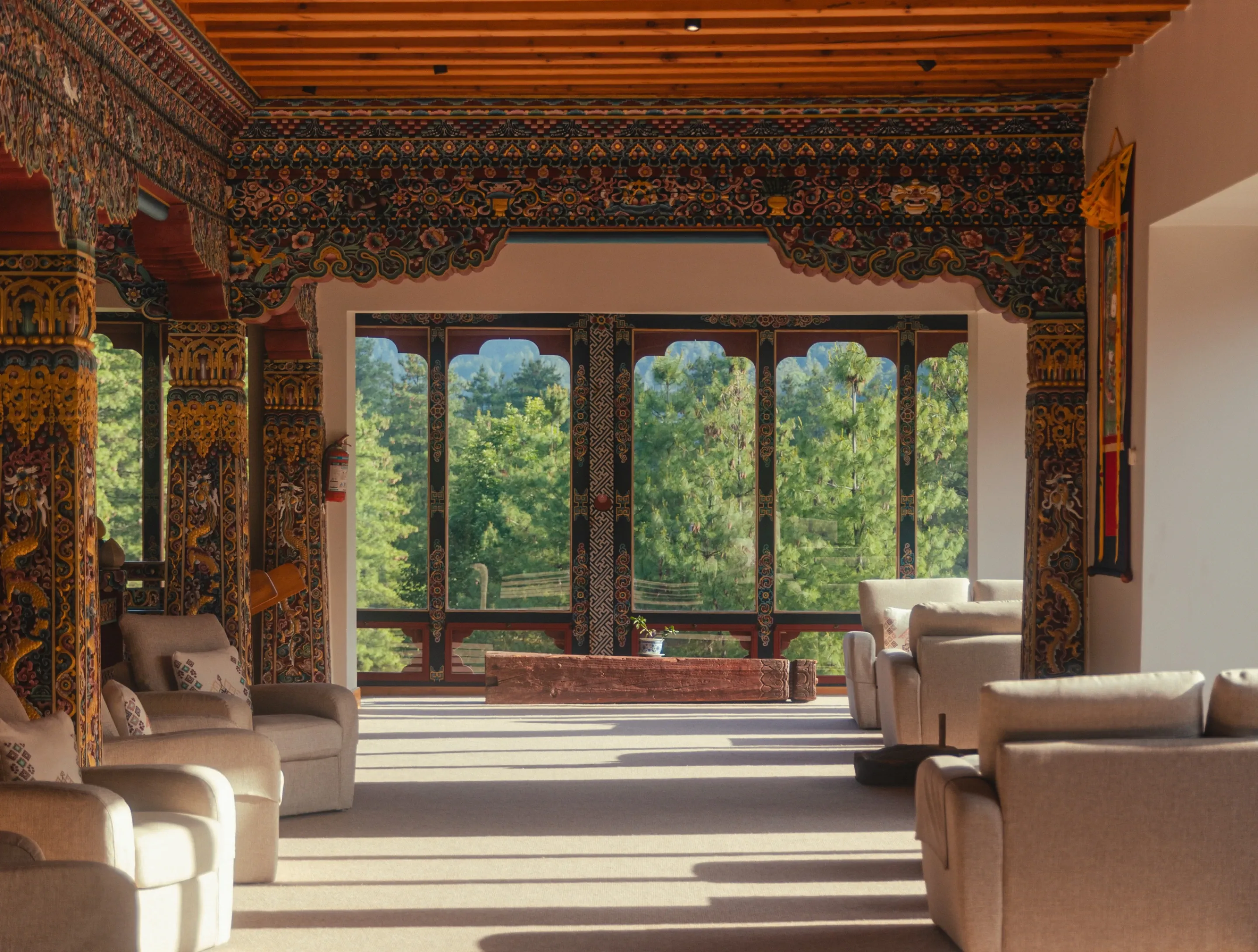
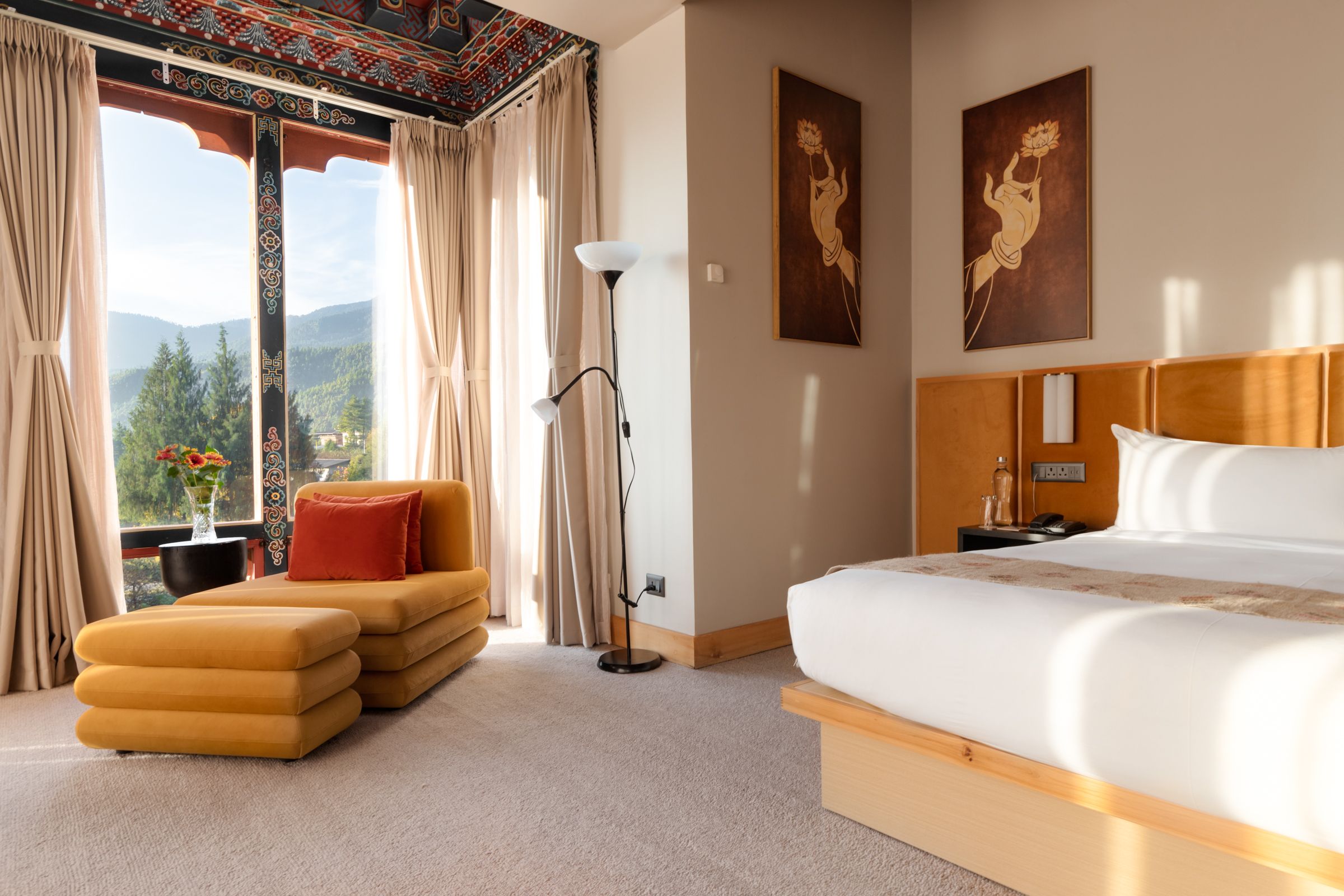
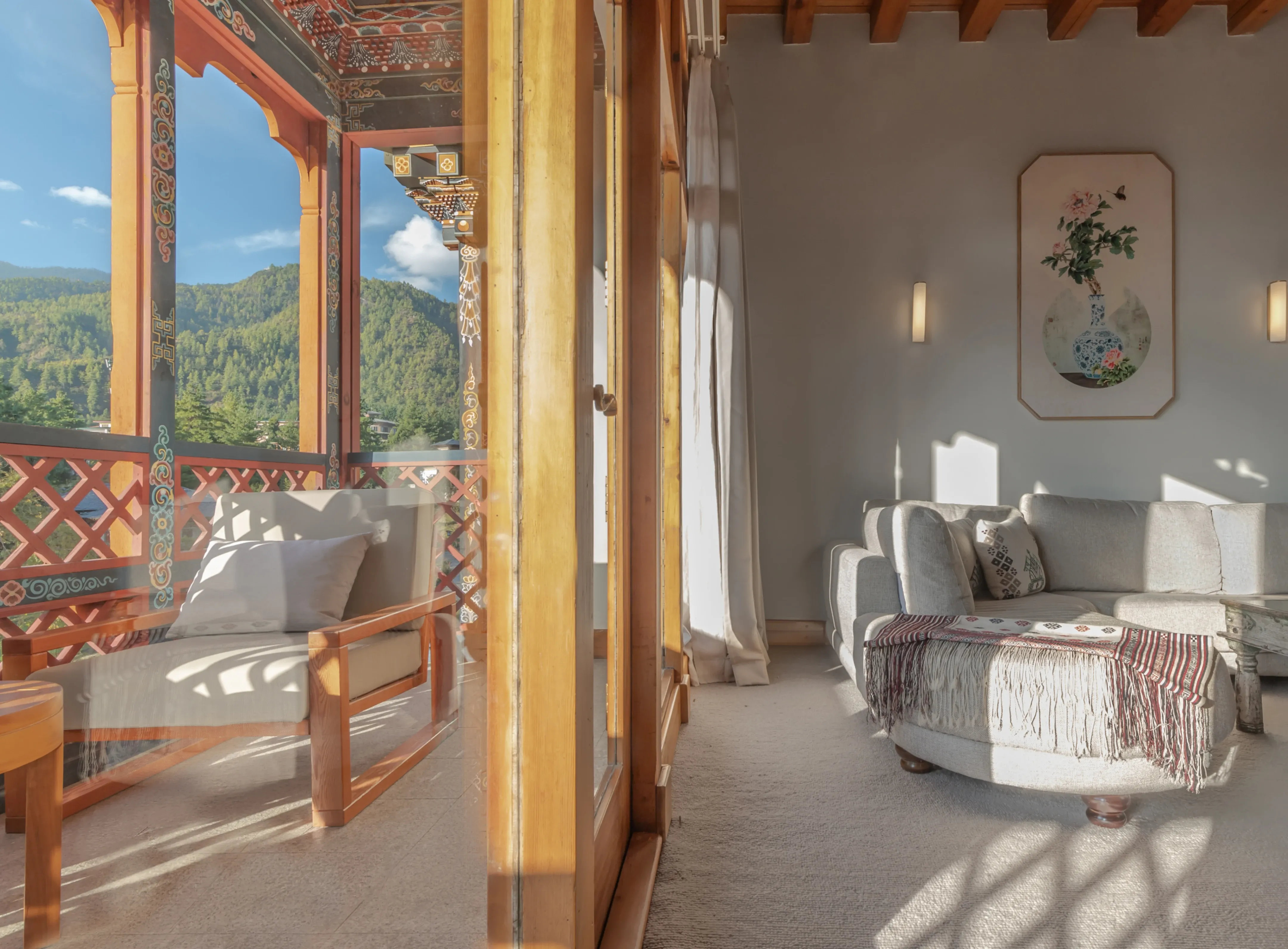
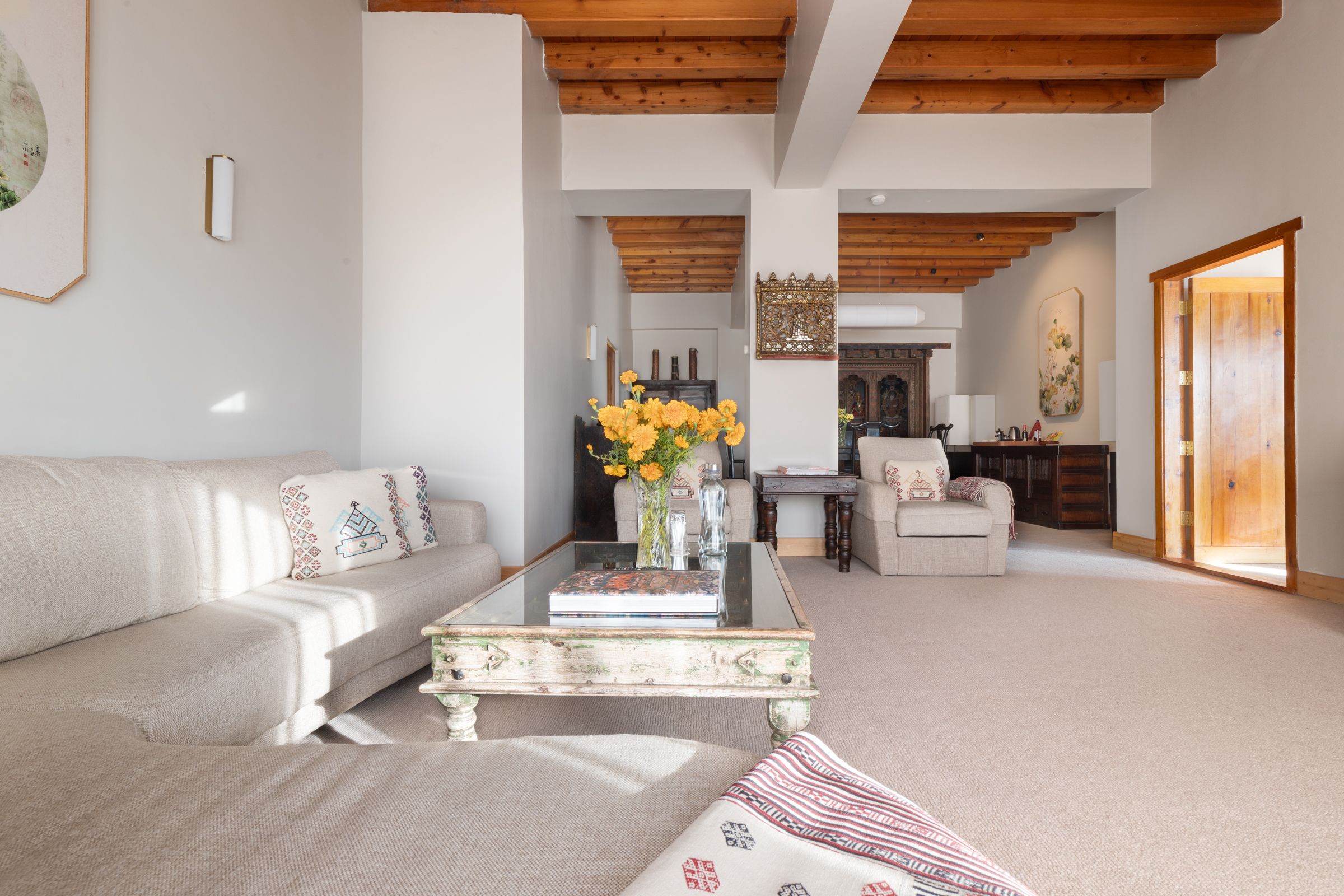
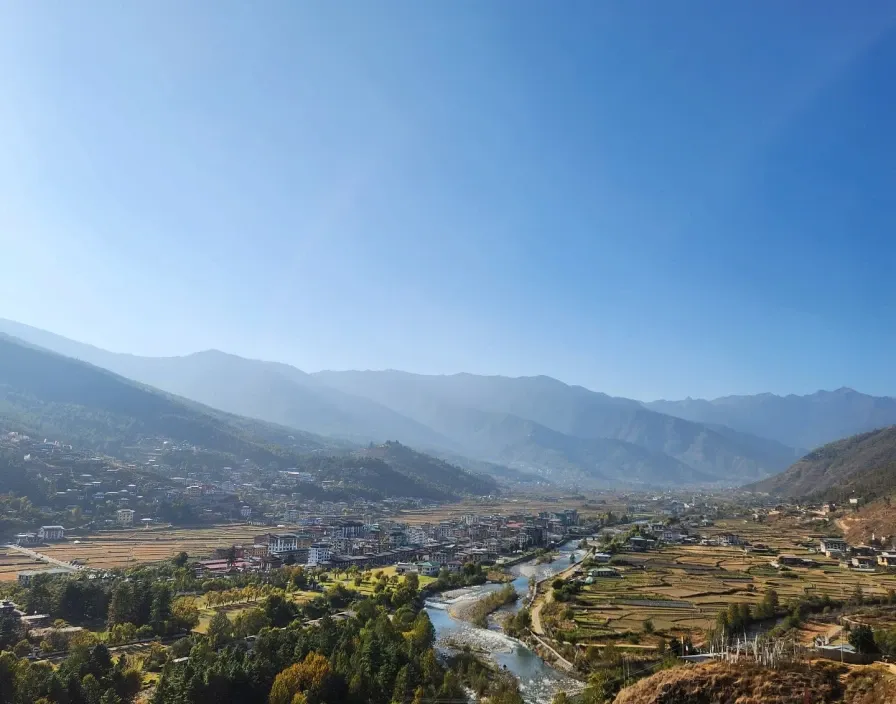
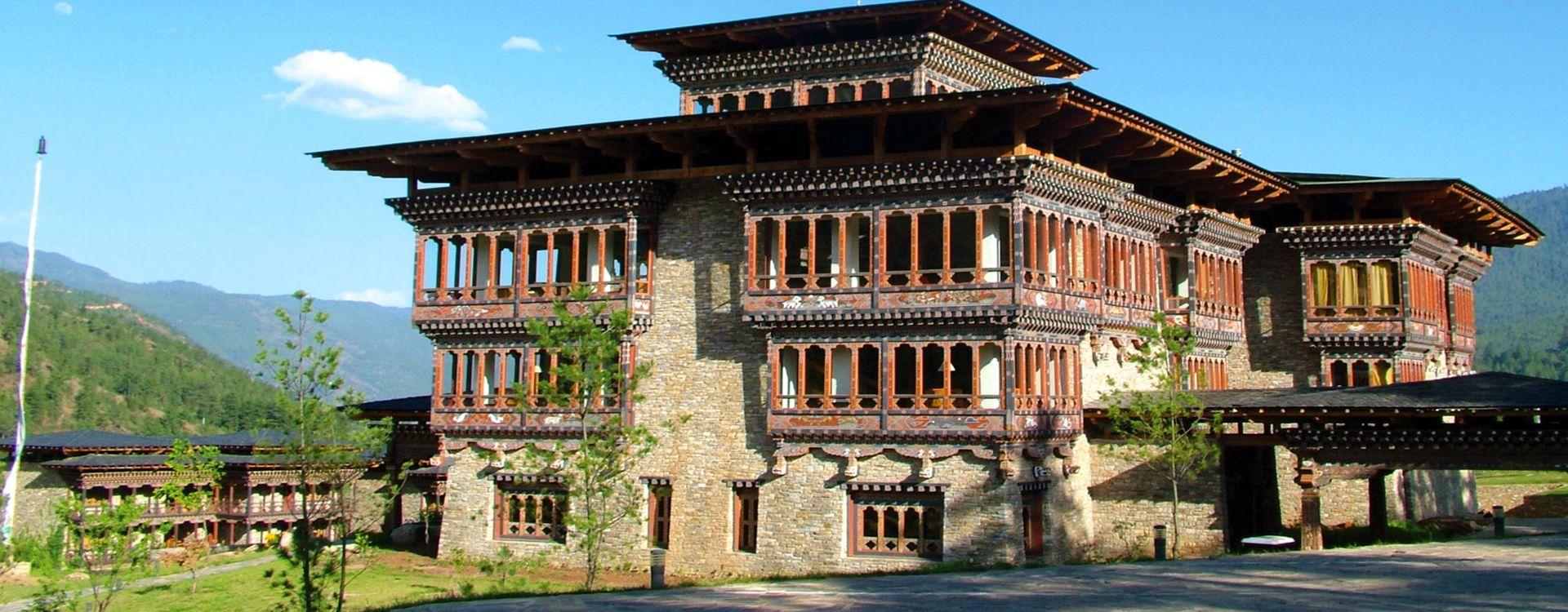
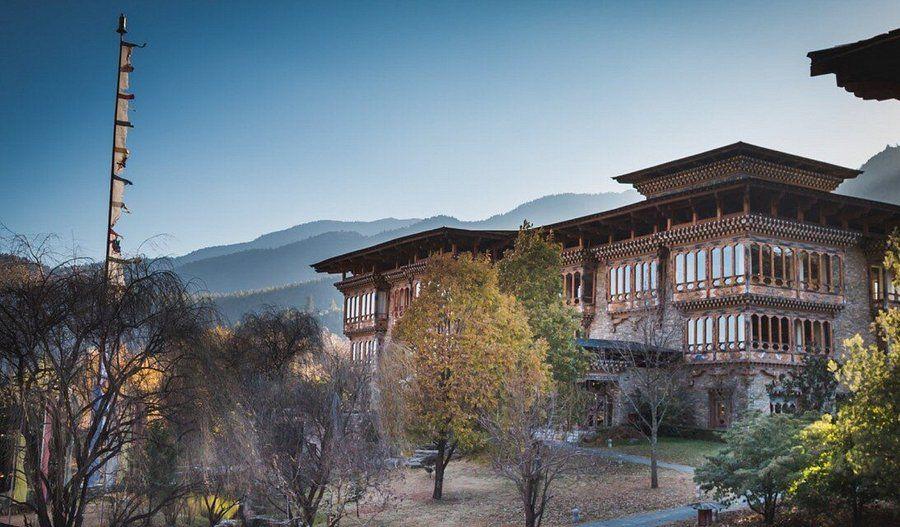
Zhiwaling Heritage is set on 12 acres in the Paro Valley, within easy reach of Bhutan’s most revered temples and monasteries. The hotel was envisioned by a local Bhutanese businessman and handcrafted by local Bhutanese artisans. To this day, Zhiwaling Heritage is wholly Bhutanese owned and staffed.

From its traditional Bhutanese architecture to its elegant temple made with 450-year-old timbers to its Swedish under-floor heating, Zhiwaling Heritage seamlessly combines past and present in all areas of operation. Bathe in our goodwill and leave with a truer sense of Bhutan in your heart.


  • Zhiwaling Heritage photograph 1
  • Zhiwaling Heritage photograph 2
  • Zhiwaling Heritage photograph 3

Zhiwaling Heritage

Paro • Bhutan


Category
Heritage Hotel
Best Time to Visit
Year round
Best For
Couples, Slow Stays

11 Experiences

Explore Journeys

Browse Journeys hosted by this property

11 Experiences

Moments that make this house

Each one designed by the house and hosted by the people who live it. Collect the ones you want to keep.

    • shrine visit

    PARO • BHUTAN

    Light a Butter Lamp in Zhiwaling's Shrine Room

    Host • Zhiwaling Heritage
    Light a Butter Lamp in Zhiwaling's Shrine Room

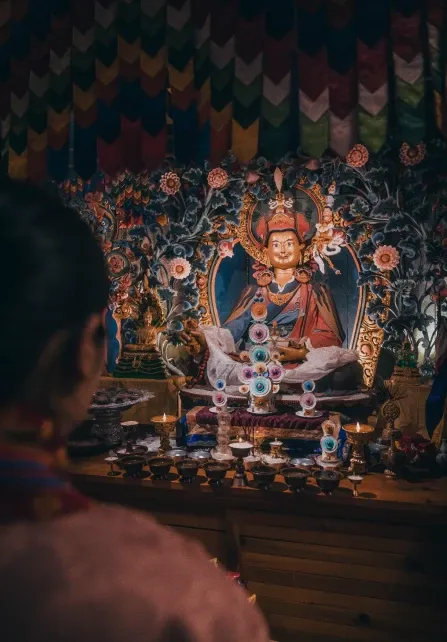
    The shrine room on Zhiwaling's upper floor is built from 450-year-old timbers reclaimed from Gangtey Monastery, founded in 1613 above the Phobjikha valley in central Bhutan. Guru Rinpoche sits at the centre of the altar, with the treasure-revealer Pema Lingpa on his left and Zhabdrung Ngawang Namgyal, who unified Bhutan, on his right. You come here straight from the airport, before you have seen your room, and light a butter lamp to set on the altar. It takes a few minutes and asks nothing of you beyond quiet. The same three figures recur over the days that follow, in almost every temple and fortress you walk into.

    • buddhist temple
    • temple visit

    PARO • BHUTAN

    Visit Kyichu Lhakhang, Built on a Demoness's Foot

    Host • Zhiwaling Heritage

    Visit Kyichu Lhakhang, Built on a Demoness's Foot

    In 659 the Tibetan emperor Songtsen Gampo set out to build 108 temples across the Himalaya, each placed to pin down a giant demoness whose body lay across the land, obstructing the spread of Buddhism. Kyichu Lhakhang holds down her left foot. The Bhutanese historian Karma Phuntsho has noted that, for most Bhutanese, the country's history effectively begins with this story. The temple sits close to Zhiwaling in the Paro valley: the original Jowo shrine, a second temple added alongside in 1968 by Queen Ashi Kesang, and a courtyard of prayer wheels. Two orange trees there are said to bear fruit all year. Cover shoulders and knees; this is a working temple.

    • traditional architecture

    PARO • BHUTAN

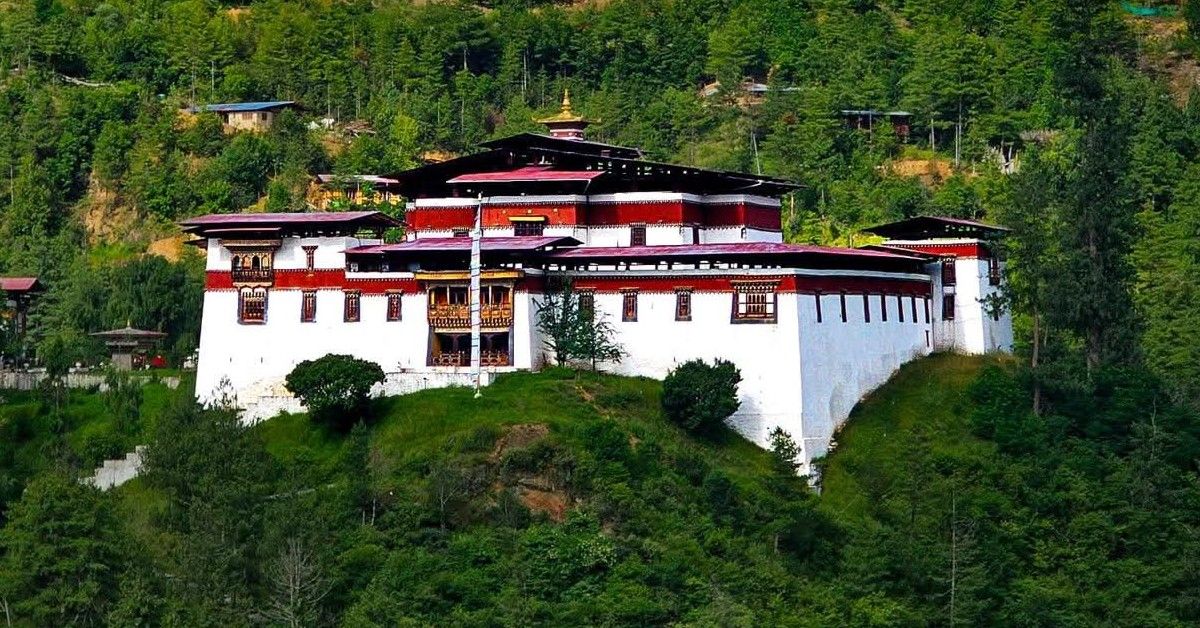
    Walk Simtokha Dzong, the Zhabdrung's First Fortress

    Host • Zhiwaling Heritage

    Walk Simtokha Dzong, the Zhabdrung's First Fortress

    Simtokha is usually read as 'on top of the demon'. The story goes that Zhabdrung Ngawang Namgyal banished a demoness who preyed on travellers into the rock on this ridge, then built the dzong around it in 1629 to keep her there. It was the first fortress he built in Bhutan, and the model for the combined monastery-and-government dzongs that followed at Punakha, Paro and elsewhere. It stands 5 kilometres south of Thimphu, on the old boundary of the Paro, Thimphu and Wangdue Phodrang regions, and still houses a Dzongkha language school. Beside the later dzongs it is small and plain, which is the point: you are looking at the prototype.

    • animal conservation

    PARO • BHUTAN

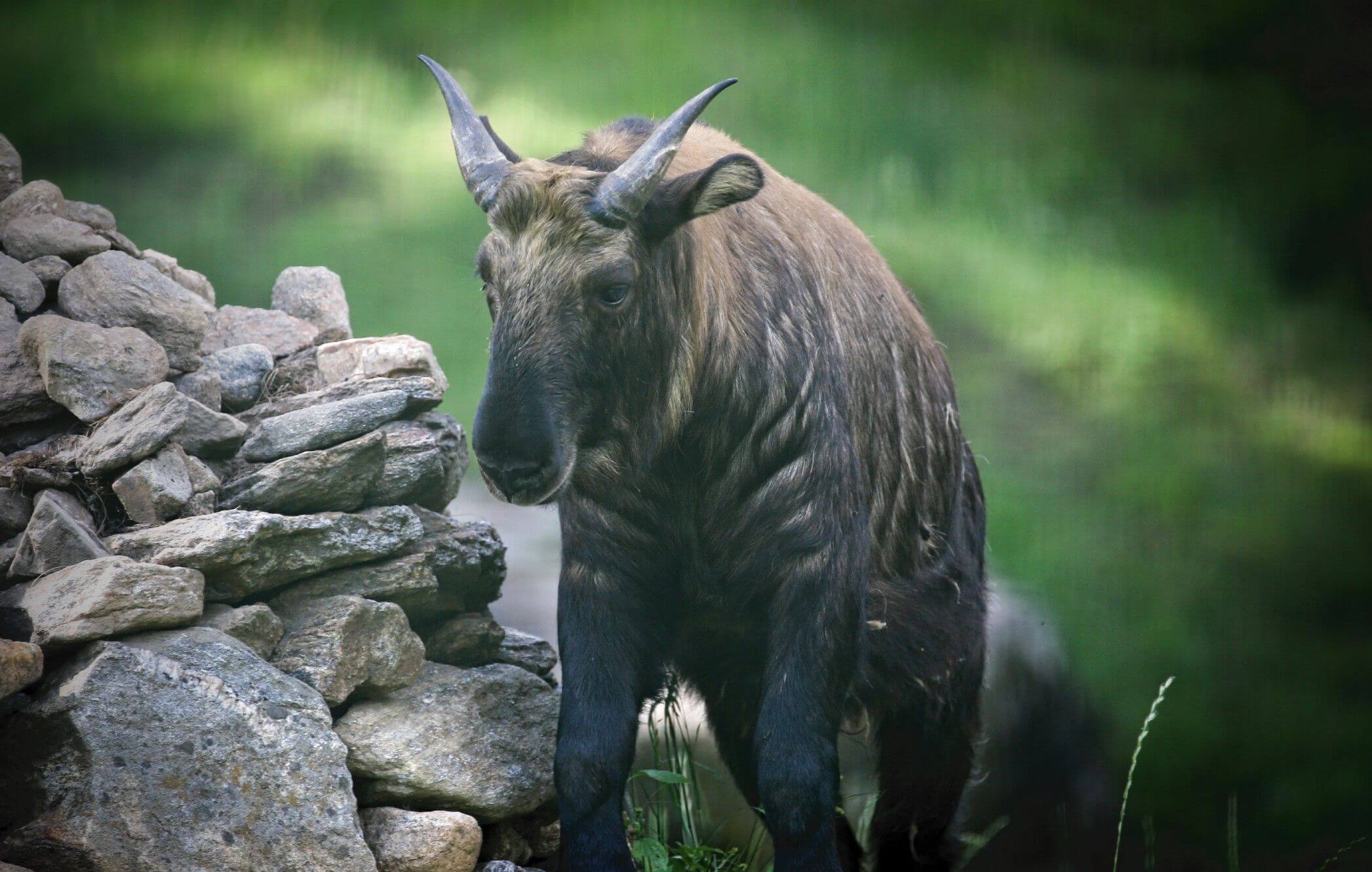
    Meet the Takin, Bhutan's National Animal

    Host • Zhiwaling Heritage

    Meet the Takin, Bhutan's National Animal

    The Bhutanese tell it this way: in the 15th century Drukpa Kunley, the Divine Madman, was asked to perform a miracle. He demanded a whole cow and a whole goat for lunch, ate both, then set the goat's head on the cow's skeleton and told it to get up. The takin, with its goat face and cattle bulk, has been the national animal since 2005. The Motithang preserve began as a small zoo; when the fourth king ordered the animals released, the takin refused to leave and wandered Thimphu's streets looking for food. So they were given 3.4 fenced hectares of forest on the city's edge. It is an enclosure, not the wild. Don't feed them.

    • local art
    • local crafts

    PARO • BHUTAN

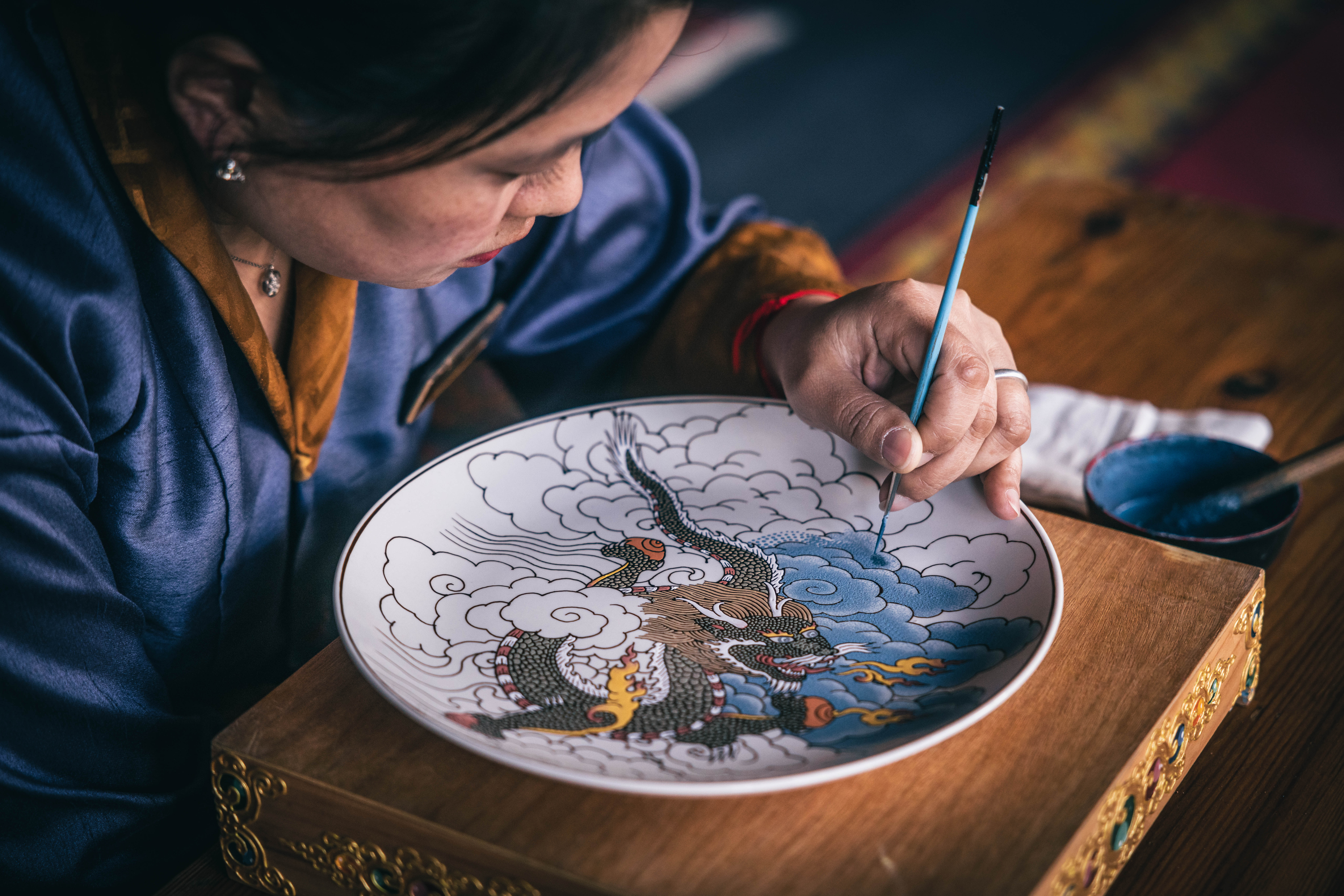
    Watch the Thirteen Arts Taught at Choki School

    Host • Zhiwaling Heritage

    Watch the Thirteen Arts Taught at Choki School

    After he retired from the civil service, the painter Dasho Choki Dorji, who had helped set up Bhutan's national arts institute in the 1970s, began taking in children who could not meet that institute's entry requirements. He taught them at his house, and fed and lodged them there too. In 1999 this became the Choki Traditional Art School, in the Kabesa valley north of Thimphu, giving free training to young people from disadvantaged families in the zorig chusum, Bhutan's thirteen traditional arts. You move through the workshops while students work: mask making, bamboo craft, woodwork, printing, prayer flags, calligraphy. The pieces in the school shop are theirs, and what you buy supports the school.

    • monastery visit

    PARO • BHUTAN

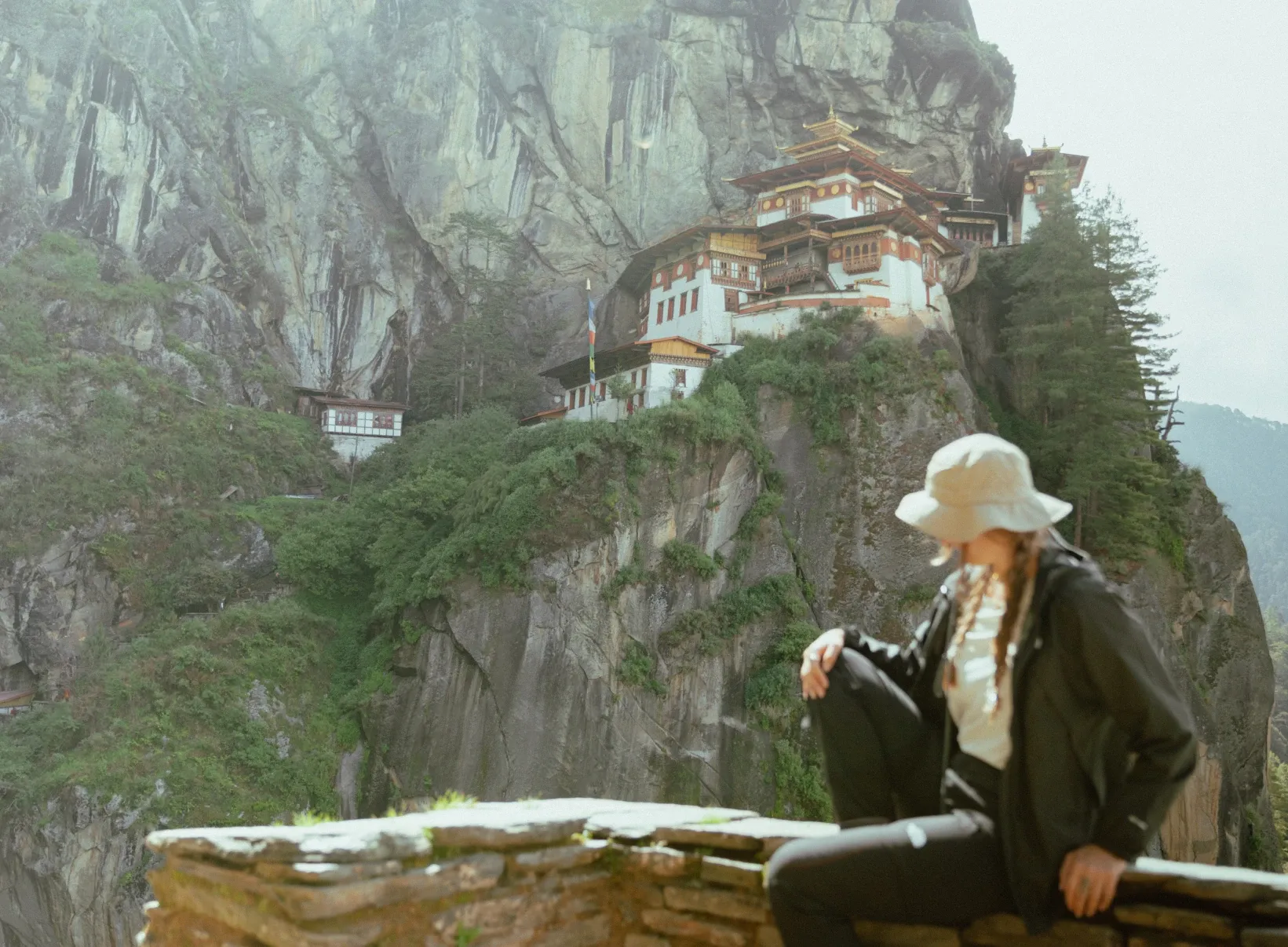
    Walk to Dzongdrakha, Paro's Other Cliff Temple

    Host • Zhiwaling Heritage

    Walk to Dzongdrakha, Paro's Other Cliff Temple

    Local tradition holds that Guru Rinpoche, arriving in Bhutan in the 8th century, stopped at Dzongdrakha before going on to the cliff at Taktsang. The morning follows him in reverse. First you drive to the foot of the Tiger's Nest trail to look up at the monastery on its rock face; then you cross the valley to Bondey village. A 20 to 30-minute walk through pine forest brings you to four small shrines built into the cliff, for Tara, Guru Rinpoche, Maitreya and Tsheringma, goddess of long life. The crystal chorten here was named Karmogyel because it was said to tremble on auspicious days. Below you, the whole Paro valley.

    • archery

    PARO • BHUTAN

    Try Bhutanese Archery and Darts at Zhiwaling

    Host • Zhiwaling Heritage

    Try Bhutanese Archery and Darts at Zhiwaling

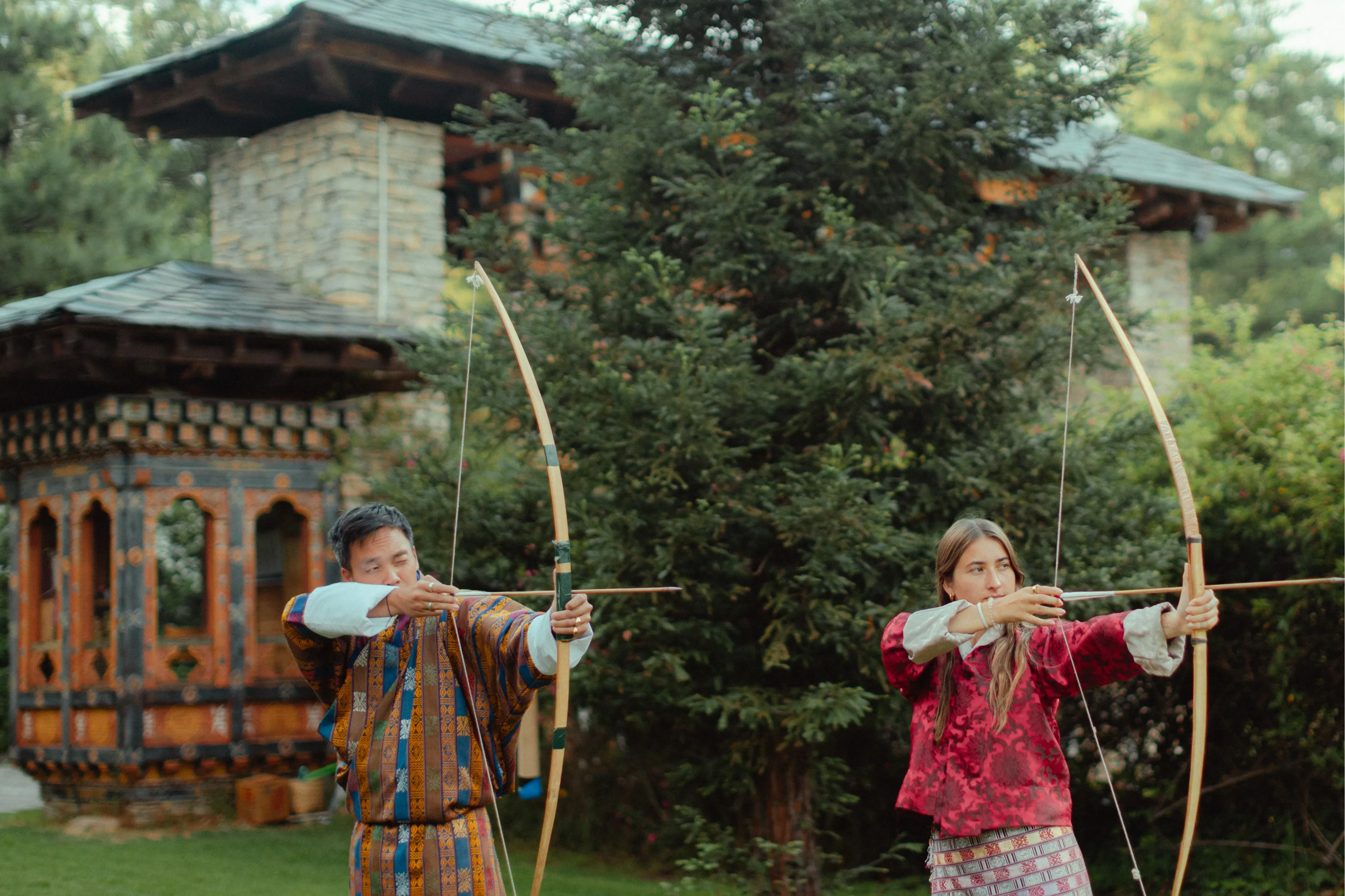
    Bhutan made archery its national sport in 1971, the year it joined the United Nations, and the game played in its villages has little to do with the Olympic version. Targets stand around 145 metres apart, more than twice the Olympic range, and are roughly the size of a paperback. The opposing team gathers near the target and heckles while you draw; when an arrow lands, the archer's teammates sing and dance. Khuru, the dart game played alongside it, uses heavy wooden darts tipped with a nail, thrown overarm at a small target 10 to 20 metres off. Back at Zhiwaling in the afternoon, you play a friendly round of each.

    • local culture

    PARO • BHUTAN

    Share Butter Tea and Folk Songs by the Firepit

    Host • Zhiwaling Heritage

    Share Butter Tea and Folk Songs by the Firepit

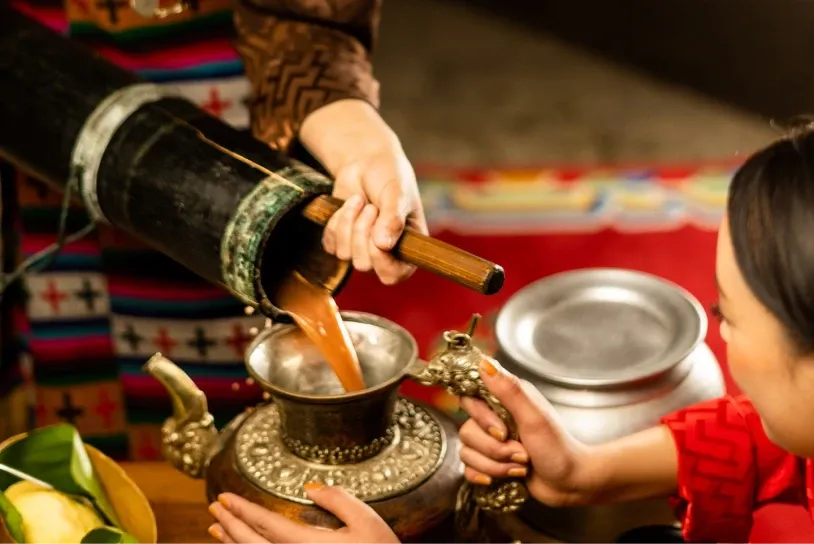
    The folk songs of the Paro, Thimphu and Punakha valleys include zhungdra, 'music of the centre', which took shape around the dzongs in the 17th century. Its long, ornamented vocal lines are hard even for trained singers, and its lyrics, though secular, often carry Buddhist allegory: one well-known song is sung by a man remembering his former life as a yak. In the evening at Zhiwaling, village artists perform gney-lu, folk songs, around the stone firepit. You sit close to the fire with a cup of suja, butter tea made by boiling tea leaves with salt and butter, savoury rather than sweet. At 2,350 metres, the evenings are cool enough to want both.

    • mountain views

    PARO • BHUTAN

    Drive Up to Chele La, Bhutan's Highest Road

    Host • Zhiwaling Heritage

    Drive Up to Chele La, Bhutan's Highest Road

    On a clear morning from Chele La you can see Jomolhari, 7,326 metres on the border with Tibet, held to be the home of Jomo, one of the five Tsheringma sister goddesses, bound by a vow to Guru Rinpoche to protect this land. At 3,988 metres, the pass between the Paro and Haa valleys is the highest point on any road in Bhutan, reached by a narrow road built in the 1990s that climbs through pine, oak and rhododendron. At the top, strings of prayer flags run along the ridge and tall white flags stand on poles. You walk a short way along the ridge and look down into Haa. Go early; cloud often closes in later.

    • architectural design

    PARO • BHUTAN

    Walk Into Paro Dzong, Fortress on a Heap of Jewels

    Host • Zhiwaling Heritage

    Walk Into Paro Dzong, Fortress on a Heap of Jewels

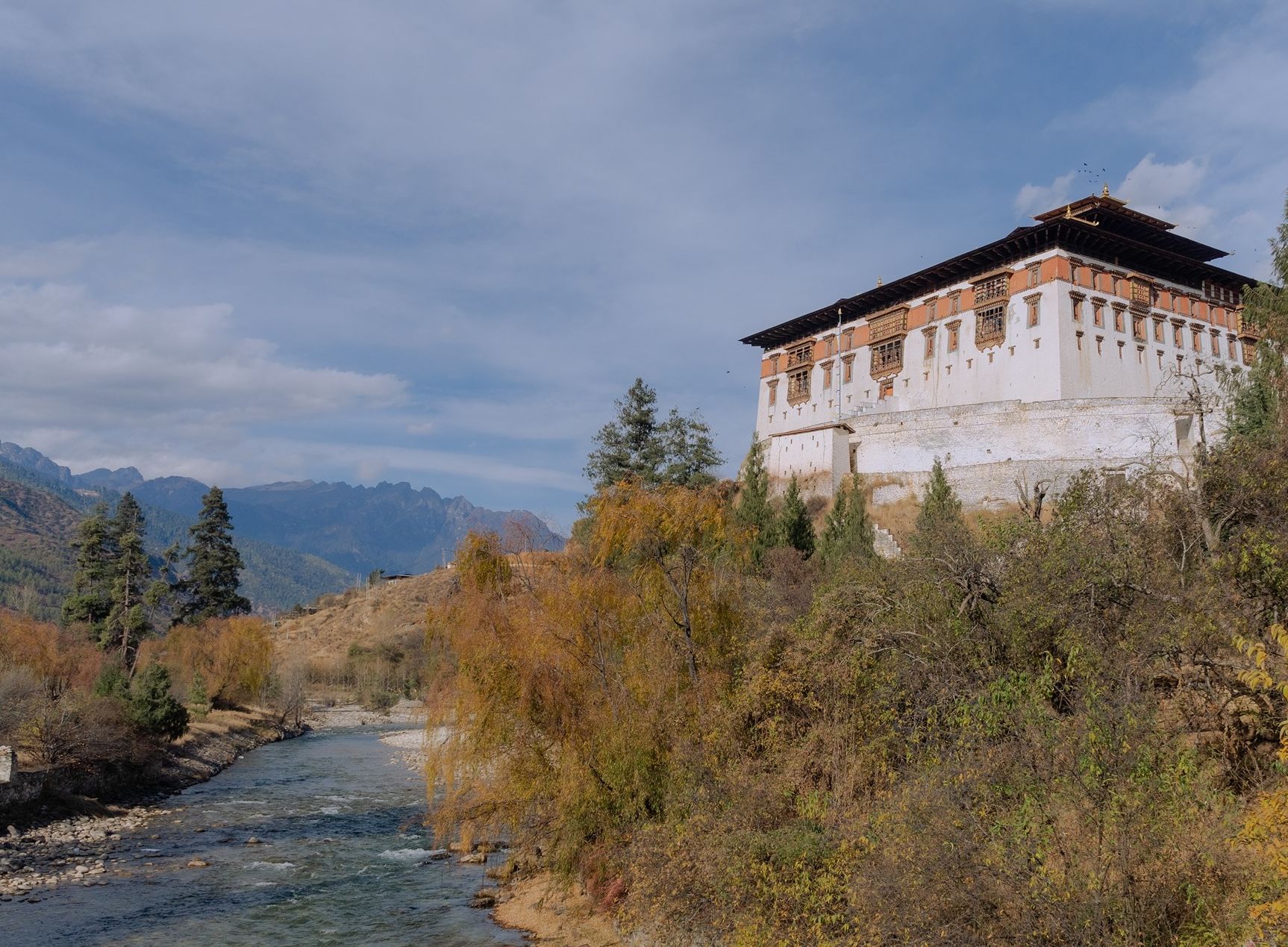
    Rinpung Dzong means 'fortress on a heap of jewels'. Zhabdrung Ngawang Namgyal had an older fortress on the site taken down in 1644 and consecrated this one in 1646, while Tibetan armies were still pushing into the valley; its sloping walls and single entrance were built for defence. In 1905 a British political officer found old stone-throwing catapults stored in its rafters. A fire in 1907 destroyed most of its statues and relics, but not the great thongdrel, the appliqué banner of Guru Rinpoche still unrolled before dawn on the last day of the spring Paro Tshechu. Monks and district officials share it today. Cover shoulders and knees.

    • hot stone bath
    • traditional healing

    PARO • BHUTAN

    Soak in a Bhutanese Hot Stone Bath

    Host • Zhiwaling Heritage

    Soak in a Bhutanese Hot Stone Bath

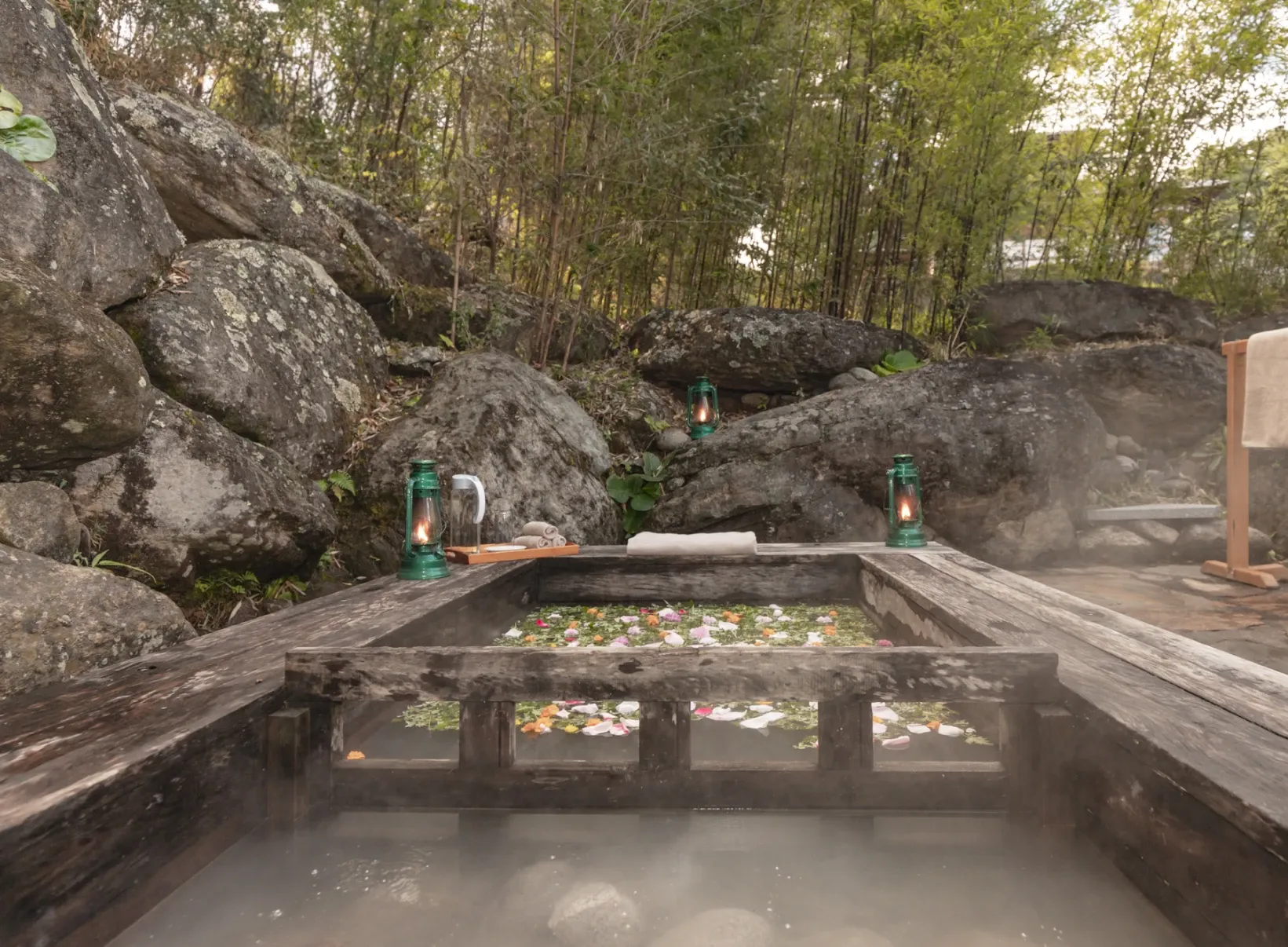
    A dotsho, the Bhutanese stone bath, was traditionally built on a riverbank outside the house, because the river supplied both the water and the stones. At Zhiwaling the stones still come from the Paro river. They are heated in a wood fire until they glow red, then lowered into a compartment at one end of a wooden tub, behind a partition that keeps them off your skin. The water hisses as they go in, and artemisia, known locally as khempa, is scattered across the surface with other local herbs. Bhutanese traditional medicine holds that the minerals released from the stones ease stiff joints. After a day at altitude, it is the right place to end up.

1 Journey from this house

Stay longer, and go deeper

Multi-night journeys built and hosted by Zhiwaling Heritage — the house's own programme, not a package assembled around it.
From guests of the house

What they found

  • “We booked a room and got a household. By the second morning the kitchen knew how we took our coffee and had opinions about where we should walk.”
    Meera & James

    Stayed February 2025

  • “The building would have been enough. What we did not expect was how much of the day the staff quietly built around what we said at breakfast.”
    Anneke de Vries

    Stayed November 2024

  • “Everything was arranged before we asked, and nothing felt arranged. That is a hard thing to get right and they get it right.”
    Tomás Ferreira

    Stayed September 2024

Postcard Newsletter

Your gateway to conscious luxury travel.

Discover new journeys, exceptional stays, city guides and upcoming events, curated for curious travellers.

Features

Postcard in the press

Articles